
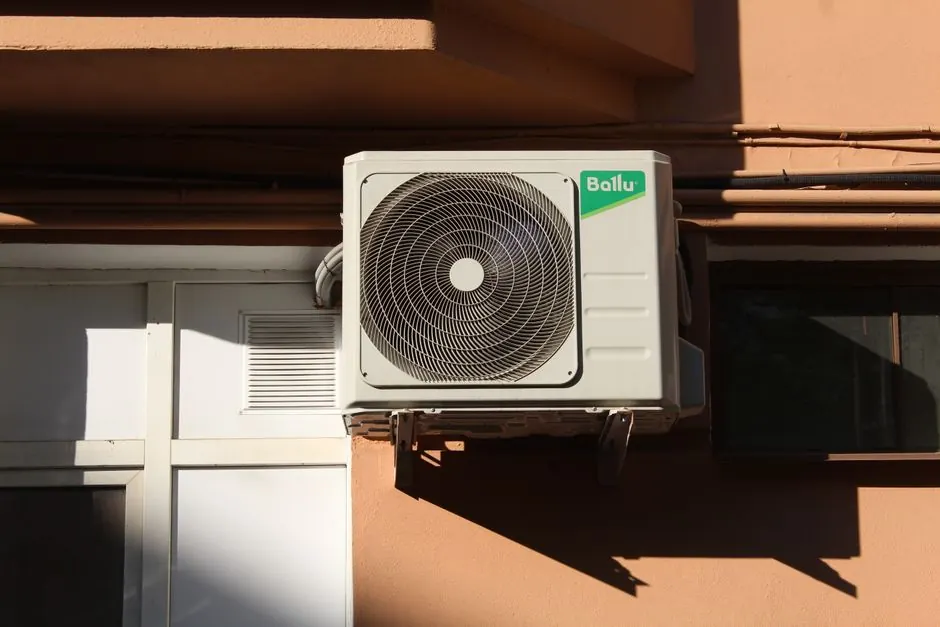
A mini split that runs but blows warm air in cooling mode is almost always losing capacity somewhere between the filter, the outdoor coil, and the refrigerant charge - and a mini split that won't heat is usually a defrost, reversing-valve, or low-charge problem instead. Nine times out of ten we find the fault in one of six places, and four of them you can check yourself in under ten minutes. Below we walk through the cooling failures first, then the heating failures, then the handful of causes that kill both modes at once - with the 2026 repair costs we see across Fairfax.
If you'd rather skip the diagnosis and get cold air back today, our team handles HVAC repair Fairfax VA calls seven days a week, and we carry the common parts for Mitsubishi, Daikin, Fujitsu, and LG heads on the truck.
Why Is My Mini Split Not Cooling in Fairfax VA?
A ductless mini split not cooling in Fairfax VA is most often a clogged filter, a frosted indoor coil, or an outdoor unit that has lost airflow because of pollen, cottonwood seed, or grass clippings packed into the condenser fins. Our area runs hot and humid from June through early September, and a single-story home in Fairfax Station or Burke can push a 12,000 BTU head hard enough that a half-blocked filter drops supply-air temperature by 8 to 12 degrees within a week.
Start with these four checks before you call anyone:
- Filter and front panel. Rinse the mesh filter under lukewarm water and let it dry fully. A wet filter grows mold in 24 to 48 hours.
- Indoor coil. Pop the cover. If the fins are white with frost, the unit is starving for air or low on charge.
- Outdoor unit. Clear leaves and seed fluff from the back and sides. You need 12 inches of clearance minimum.
- Setpoint and mode. Confirm the remote is in COOL, not AUTO or DRY, and the setpoint is at least 3 degrees below room temperature.
If those four are clean and the air is still lukewarm, the problem is on the refrigerant or control side, and that's a sealed-system job. We see this constantly on systems installed before 2018 that have never been leak-tested.
Low refrigerant charge
A mini split does not "use up" refrigerant the way a car burns oil. If the charge is low, there is a leak - most often at the flare fittings behind the indoor head, where vibration and a slightly under-torqued nut work the joint loose over a few seasons. A system that's 15 to 20 percent low will still run, still blow air, and still feel like it's trying. It just won't get below about 78 degrees on a 95-degree afternoon.
We pressure-test with nitrogen, find the leak, repair the flare or braze joint, then pull a deep vacuum before recharging. Topping off without finding the leak is money you'll spend again next summer.
Frozen indoor coil
Ice on the evaporator means the coil is below freezing, which happens when airflow is restricted or the charge is low. Turn the system off at the breaker and let it thaw completely - usually 2 to 4 hours - before you run it again. Running a frosted head can slug liquid refrigerant back to the compressor and turn a $400 repair into a $1,800 one.
Inverter board or thermistor failure
Modern mini splits modulate compressor speed through an inverter board, and that board reads temperature from two or three thermistors. When a thermistor drifts out of spec, the unit often short-cycles or locks into a low-output mode. You'll see the indoor fan running, the outdoor fan running, and almost no temperature drop across the coil. A multimeter and the manufacturer's resistance table settle it in 15 minutes.
Why Is My Mini Split Not Heating in Fairfax Virginia?
A mini split not heating in Fairfax Virginia is usually a defrost cycle that never completes, a reversing valve stuck in cooling, or a heat pump that has simply run out of capacity below about 5 degrees Fahrenheit. Northern Virginia winters swing hard - a 55-degree January afternoon followed by a 12-degree night is normal here - and that range exposes weak components fast.
Before you assume the worst, check three things:
- Is the outdoor unit running at all? If the fan and compressor are silent, you have an electrical or control fault, not a refrigerant fault.
- Is there frost on the outdoor coil? Light frost during a defrost cycle is normal. A solid block of ice that never clears is not.
- Does the indoor head blow cool air for 3 to 5 minutes at startup? That's the unit warming the coil before it ramps the fan. If it never switches to warm, the cycle is stalling.
Defrost cycle stuck or sensor failure
In heating mode the outdoor coil gets cold enough to frost, and the board periodically reverses the cycle to melt it. When the outdoor coil sensor or the defrost board fails, the unit either never defrosts - and slowly ices into a solid block - or defrosts every few minutes and never delivers heat. Both are board-and-sensor repairs, and both are common on units that have been in service 8 to 12 years.
Reversing valve failure
The reversing valve is the part that flips the system between cooling and heating. When it sticks, you get a unit that runs in heat mode but blows 60-degree air, because the refrigerant is still flowing to the indoor coil as an evaporator. You can sometimes hear a faint hiss or click when you switch modes. A stuck valve is a genuine repair, not a reset - plan on a few hundred dollars in parts plus labor.
Cold-climate capacity limits
A standard mini split loses capacity as outdoor temperature drops. At 17 degrees, most single-stage ductless systems deliver roughly 60 percent of their rated heat; at 5 degrees, many drop to 40 percent or shut down entirely. If your unit keeps up fine at 35 degrees and quits at 15, that's not a breakdown - that's the wrong equipment for the climate. Cold-climate heat pumps rated to minus 13 degrees solve it, and we install them regularly in Fairfax Station and Centreville homes that sit on exposed lots.
If your system is a conventional split rather than ductless, the same symptoms point to different parts, and our heating repair Fairfax VA team handles both.
Causes That Hit Both Modes
A ductless mini split not cooling or heating is usually failing at something upstream of the mode switch - power, communication, or airflow. When neither mode works, stop looking at the refrigerant and start looking at the wiring and the boards.
Dirty filters and blocked coils
This is the single most common cause of a mini split not working in Fairfax VA, and it's free to fix. A filter that's 70 percent loaded cuts airflow enough to drop capacity by a third and freeze the coil in cooling mode. In heating mode, the same restriction trips the high-limit and shuts the head down. Clean or replace every 2 to 4 weeks during heavy-use months - more often if you have pets or you're near a wooded lot in Oakton or Fairfax Station.
Tripped breaker or disconnected whip
Mini splits run on a dedicated 208/230-volt circuit with its own breaker. A weak breaker, a loose disconnect at the outdoor unit, or a chewed whip (squirrels love the insulation) kills both modes instantly. Check the breaker panel first, then the disconnect box next to the condenser.
Communication fault between head and condenser
Ductless systems pass control signals over a low-voltage communication wire between the indoor and outdoor units. A nick in that wire, a loose terminal, or a lightning surge can break the handshake. The symptom is distinctive: the indoor head beeps, flashes a code, and the outdoor unit never starts. Codes vary by brand - Mitsubishi flashes a combination of LED blinks, Daikin shows a two-letter code on the remote.
Blower motor or fan failure
If you hear the compressor running outside but the indoor head is silent, the blower motor or its capacitor has failed. No airflow means no heat exchange, and the coil will ice or overheat within minutes. We stock blower motors for the most common 9,000 and 12,000 BTU heads, so most of these are same-day fixes.
What to Watch Out For
The most expensive mini-split mistakes we get called to fix are the ones homeowners make in the first hour. Avoid these:
- Adding refrigerant without leak-testing. You'll pay $150 to $300 for a top-off that leaks out again in 60 to 90 days.
- Running a frozen unit. Ice on the coil plus a running compressor equals liquid slugging and a burned-out compressor. Shut it off at the breaker.
- Power-cycling ten times in a row. Inverter boards store fault codes. Repeated resets can wipe the code your technician needs to diagnose the fault in one visit.
- Hosing down the indoor head. Water into the control board is a $400 mistake. Wipe the coil, don't spray it.
- Oversizing the replacement head. A 15,000 BTU head on a 12,000 BTU line set and condenser will short-cycle and never dehumidify. Match the pair.
One more: don't skip the annual tune-up. A $129 to $189 spring service that cleans both coils, checks the charge, and verifies the defrost cycle prevents most of what's in this article. Our HVAC tune up Fairfax Virginia visits take about 90 minutes per system.
When to Call a Professional
Call a technician the moment you see ice on the indoor coil, smell a sweet chemical odor near the line set, hear the outdoor unit grinding, or find a fault code you can't clear by resetting the breaker once. Those four symptoms point to sealed-system or electrical faults that no amount of filter cleaning will fix.
We're a local, state-licensed HVAC contractor, and we work on every major ductless brand - Mitsubishi, Daikin, Fujitsu, LG, Samsung, and Gree. Our technicians carry recovery equipment, nitrogen, vacuum pumps, and the thermistor and board kits for the most common failures, so a diagnosis and repair usually happen on the same visit. We serve homeowners across Fairfax and the surrounding communities, including HVAC Vienna VA and Falls Church, and we quote the repair price before we start work.
Typical 2026 pricing in this area: diagnostic visit $89 to $129, filter and coil cleaning $129 to $189, blower motor replacement $350 to $650, thermistor or sensor replacement $220 to $400, defrost board $400 to $750, leak repair with recharge $600 to $1,200, and reversing valve replacement $900 to $1,600. A full ductless head replacement runs $1,800 to $3,400 installed.
Frequently Asked Questions
Why is my mini split not cooling in Fairfax VA?
In our service area, 7 out of 10 no-cool calls trace to a clogged filter, a dirty outdoor coil, or a frosted indoor coil - all airflow problems. If those are clean and the unit still blows lukewarm air, the system is low on refrigerant or has a failed inverter board, and both need a technician.
How do I fix a mini split that is not heating in Fairfax VA?
First confirm the outdoor unit is running and the remote is set to HEAT with a setpoint 4 degrees above room temperature. If it runs but blows cool air, the defrost cycle, reversing valve, or charge is at fault. Those are sealed-system repairs - expect $400 to $1,600 depending on the part.
Can a dirty filter cause a mini split not to cool in Fairfax VA?
Yes, and it's the most common cause we find. A filter that's 70 percent loaded cuts airflow by roughly a third, drops capacity, and freezes the indoor coil within hours. Rinse it every 2 to 4 weeks in summer and let it dry completely before reinstalling.
Should I call an HVAC technician in Fairfax VA for mini split not cooling?
Call us if you see ice on the indoor coil, smell a sweet odor near the line set, hear grinding from the outdoor unit, or the fault code returns after one breaker reset. Clean filters and coils yourself first; anything involving refrigerant or a control board needs a licensed technician.
How long should a mini split last in Northern Virginia?
Most ductless systems here last 12 to 18 years with annual maintenance. Without it, we routinely see compressor and board failures at 8 to 10 years, largely because our humid summers and freeze-thaw winters work the coils and defrost cycle harder than a milder climate would.
Get Help With HVAC in Fairfax
If your mini split is still blowing warm air after a filter clean and a breaker reset, we'll diagnose it and give you a straight repair-or-replace answer the same day. Call Fairfax HVAC Experts at +1 571-760-4715 and we'll get your system back to the temperature you set.